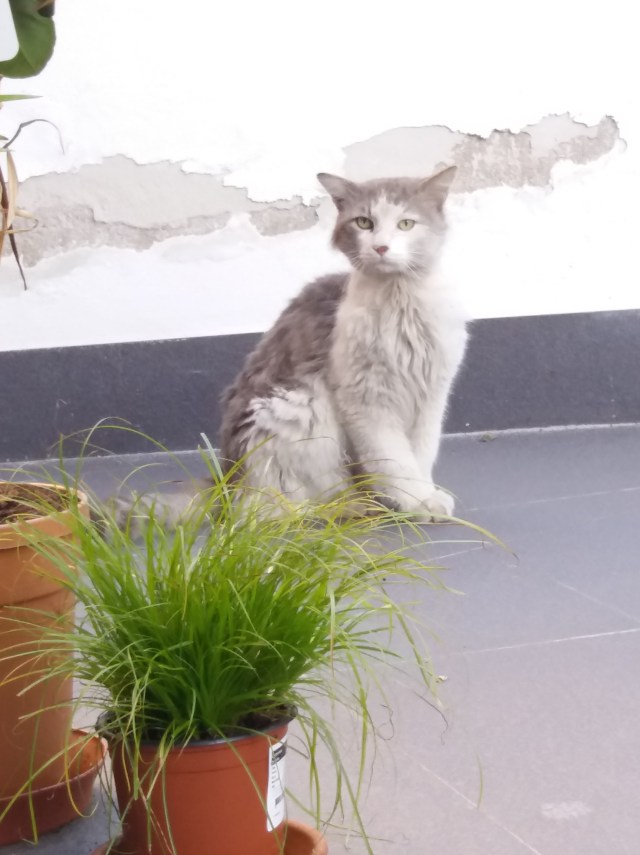
ScruffBall FluffBall wondering when I’m going to feed him 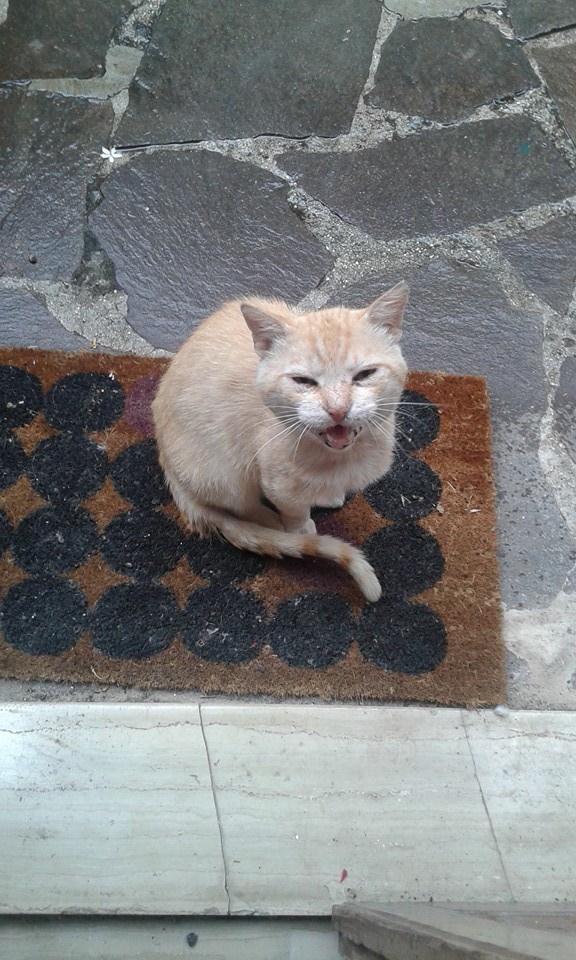
A hungry Giorgio waiting not so patiently for breakfast in the rain 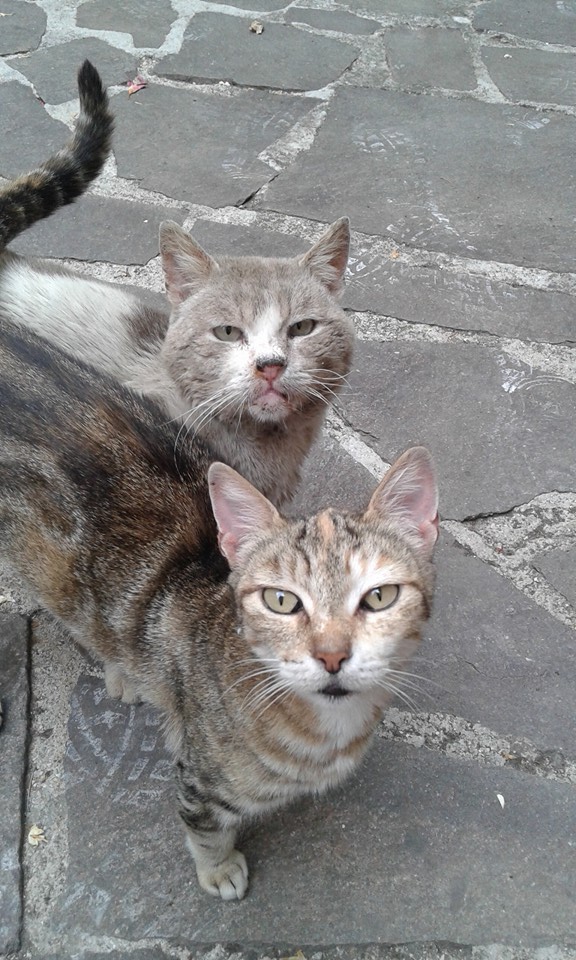
Top – Nonno Arcobaleno (and Giulietta stealing attention – and food)
So, looking after street cats in Italy can be a little difficult, bureaucratically speaking. Technically, the health board (ASL) of each comune is responsible for the welfare of the area’s cats, but how much they actually do for the cats depends on where you are.
I try to help out as much as I can and communicate with volunteers from all over Abruzzo. Some get lucky, especially those in smaller comunes, where the ASL has less work in general. The ASL employees will actually come out, trap stray cats, sterilise them, microchip them and re-release them. This is the minimum of what they are LEGALLY supposed to do.
However, that’s not always the case.
I live in Pescara, a rather large city of over 120,000 people – it’s the largest city in Abruzzo. Our local ASL is constantly overwhelmed by their various responsibilities and if we want the street cats neutered, we have to call for an appointment, trap the cats, take them to the ASL vets ourselves and then recollect and re-release them. And they only offer appointments for street cats once a week, on Thursday mornings.
But here’s the clincher – they’ll only sterilise female cats.
By law, they are also responsible for neutering male cats but they will not give appointments for male cats. Dedicated cat volunteers have argued with the administration for years, but to no avail. If we want males neutered, we have to go private – and pay.
Why sterilise male cats if all the females are sterilised?
Firstly, not 100% of the females are sterilised. Somebody is always abandoning female cats, many already pregnant, in the various cat colonies around Pescara. If volunteers don’t find them in time, they give birth in people’s gardens or garages, continuing the cycle of street cats. There aren’t enough foster homes available, so many of the kittens born on the street become pregnant within the first six months. Just when we think that the females in a colony have all been sterilised, someone undoes all the hard work with one seemingly simple act.
Secondly, entire male cats are wanderers. They travel around the city from colony to colony looking for females in heat, risking being killed on the road. A neutered male loses his desire to find females in heat and is considerably less likely to fight other males for access to females, even sterilised ones. By neutering male cats, they don’t wander or fight so much – double win.
Thirdly, neutering male cats can seriously reduce the transmission of diseases amongst cat colonies, either through mating or through fighting.
Neutering males stabilises colonies and a stable colony is a much healthier colony.
Neutering a male cat costs 70€ – if you’d like to help with the costs of supporting the street cats in Abruzzo, please go to https://www.gofundme.com/f/supporting-street-cats-in-abruzzo

 Cats of Abruzzo
Leave a comment