Make sure you read that correctly – I’m not wishing you happiness for cat month, instead it’s a month to celebrate Happy Cats and how we can help our furry friends live happy lives.
One of the biggest issues that faces cats today is stress. In the wild, cats, despite being one of the most effective predators on the planet, are also prey animals to foxes, owls, snakes, and other predators. Domestic cats only branched off from their wild ancestors about 10,000 years ago, which is just a drop in the ocean of time. 10,000 years is really not a very long time to change the previous 2 million years of evolution, and they really haven’t changed all that much in that time. In fact, they’ve changed so little that cross-breeding between wild cats and domestic cats is still a common occurrence in areas where the two species meet.
Understandably, our domestic companions still have a whole host of innate prey animal behaviours, including fear of strangers, noises, other animals etc.; the desire to hide in small, dark spaces (usually boxes!); and the natural instinct to hide, as best they can, any form of weakness, including pain and stress. In the wild, certain levels of stress help a cat survive, but these constant stressors can become fatal for pet cats.
In this post, I’m just going to focus on the long-term, chronic stressors that cats face, rather than the occasional acute sources of stress, such as moving house or going to the vets. Many cats do not show any outward sign of stress, they hide it so they don’t appear weak to potential enemies or predators, but this “invisible” stress can actually go on to cause significant physical medical issues, and can exacerbate existing conditions. Making sure that your cats have a relaxed and happy home setting is vital to ensure that they have good quality of life – and who doesn’t want that for their furry friends?
So what causes stress for cats?
- Resource issues
- Food – If you have more than one cat in your house, competition for resources may be providing a huge source of stress. The cats may not even show any signs of this rivalry between them, it may look like one happily eats from the food bowl and then the other one follows, but in reality, the first cat that eats is showing dominance over the second cat – and this is stressful, not just for the non-dominant cat, but also for the dominant cat who feels the need to protect “his” resources. Make sure that every cat has their own food bowl and that they have space between them. Even when cats do group together in the wild forming colonies, they still hunt and feed alone. Having another cat nearby, even a bonded cat, can cause anxiety levels in the cats to sky-rocket. It may be that they still choose to share and eat together, which is fine, but they should have the choice to eat separately and not be forced to eat together.
- Water – cats are really fussy when it comes to water. Keeping the water bowl too close to the food could actually be stressing your cat out no end. In the wild, cats eat small animals and birds that may obviously carry diseases that can be harmful for the cats. Cats are very particular about their water becoming contaminated by food and are very aware of water sources that are in close proximity to food sources. Providing fresh water every day, in different ways such as different bowls and fountains, located away from food areas will help reduce this potential stress.
- Litter boxes – only people who truly love something will clean up its poop! Incorrect litter box etiquette can be hugely internally traumatic for cats. Burying poop is a natural feline behaviour but it’s not really about cleanliness, and it actually goes back to their natural prey/predator animal instincts and territory recognition. In the wild, cats will bury their faeces to avoid attracting unwanted attention from predators, to avoid letting potential prey animals know that they are nearby, but also to avoid dominant, stronger cats in the area from feeling threatened. Cat faeces (and urine) contain a lot of information about individual cats from the pheromones contained in the waste, and cats can recognise their own poop. These natural instincts to bury faeces are reinforced by kittens watching their mothers perform the behaviour, so some orphaned kittens may need to be taught and encouraged to correctly use litter box use. A lack of litter boxes to choose from, or a lack of clean litter, can cause cats to feel stressed about their toilet routine, which in turn can lead them to go in inappropriate places, such as in the bathroom or on the bed, or worse, it can lead to stress-related medical conditions such as cystitis. The generally accepted correct number of litter boxes for house cats is n+1 (where n= the number of cats). This allows the cats to have plenty of options to choose from, as some cats will not defecate in a litter box that has already been used by another cat, and other cats also prefer to urinate in one litter box, and poop in another. Undoubtedly, this can be difficult to manage for a multi-cat household, 5 cats = 6 litter boxes, which is a huge amount of space, but giving cats as many litter boxes as is physically possible can really have a huge effect on their well-being. Other factors to note about litter boxes are their size. A litter box should be big enough for a cat to turn around in comfortably, usually 1.5 times the body-length of the cat, and really, while we might prefer the litter box to have a lid, cats actually prefer uncovered litter trays. This, again, goes back to their wild instincts. Cats are very vulnerable while they are toileting, and they naturally like to be able to see any potential threats that might be heading their way, and they choose to go in quiet areas where they can hear any disturbance. Some people choose to put the litterbox in the bathroom of the house, which is OK as long as the cat has open access to the bathroom, but more timid cats may start to avoid the bathroom because of the regular use of the shower, which may cause them to go in what we consider to be inappropriate places. It’s really important to know your cat and to realise where the litter box is most convenient for them and not what’s best for us.
- Other pets
- Other cats – Some people still believe that, even if it takes years, all cats will “eventually” get along, but this is simply not true and could cause a whole host of turmoil in the meantime. Once believed to be solitary animals, studies of supported colonies of feral cats have actually revealed an array of complex social behaviour between domestic felines. We have to remember that a cat is not just a cat, but a complex individual animal with its own personality traits and quirks. While some cats, even unrelated cats, will instantly take to each other and become a bonded pair, others will simply tolerate each other, while some will actually become true enemies. Those who simply tolerate each other, or worse hate each other, need to be watched and managed carefully in a household if stress is to be reduced. Pheromone diffusers and sprays can be very useful in the management of unfriendly cats, but providing as much space as possible for the cats to get away from each other is essential. Even if you live in a small flat or apartment, look around your home and think how you can use height to increase territory. Here, the cats are allowed everywhere – on top of the kitchen cupboards, on top of the fridge, on top of the wardrobes and book shelves, the balcony has been secured with a net so they can safely go out there where there is a sofa, a large cat tree and other furniture for them to utilise. Allowing cats to display their natural lookout behaviour from a high point is essential, and giving them opportunities to escape one another is vital. Look at your cats, they probably display territorial behaviours – one will always sleep on the sofa, while another chooses the bed. One will be on the cat tree while another likes to use the fridge. Even bonded pairs divide up the territory of the house with invisible boundaries.
- Dogs – dogs are predatory animals and they often have strong predation instincts. Correct introductions between cats and dogs are essential for a peaceful home life, and all animals need to be monitored for life. If a dog is not feeling well, it may turn on the resident cat if it gets too close. If a cat is feeling stressed out or has something else going on, then it may also turn on the dog. We all have our bad days, animals are no exception.
- Animals outside
- Neighbourhood cats – Without doubt, this is probably one of the most difficult stressors to overcome. There may be dozens of cats in any one neighbourhood, far more than would naturally occur in the wild, and they don’t necessarily get to define their own territories. In wild cats, one male occupies a territory with an average of 3 females, but domestic cats don’t get to experience this natural set-up, because we decide where their home base is. The only thing we can control is our own space. Make sure that any outside areas, including balconies and gardens, are as friendly for your cat as possible. Ensure that there are plenty of resources in a garden, such as water and places to hide or get up high, to reduce competition between your cat and neighbourhood cats. Unneutered stray males can be a huge problem for resident cats and their owners. Finding out about local TNR schemes, or even starting one of your own if necessary, will be the best way to reduce conflict among male cats.
- Foxes – many people fear that foxes will kill and eat their cats, but this is actually incredibly rare. A grown adult cat weighs anywhere between 4 and 6 kg on average – the average fox is not much bigger at 5.5-6.5 kg. The initial instinct when a fox sees a cat is that of self-preservation – the fox will actually see the cat as a threat and will run away rather than risk any sort of injury. Even a small injury, such a scratch from a cat, can turn fatal for a wild animal if infection and disease were to set in. Most of the time, conflicts do not happen and at most, the cat will chase the fox out of its garden. One time to be aware of potential fox aggression is during cub-season, but all animals can be expected to defend their young. However, sometimes the presence of foxes in gardens can cause a cat to be stressed and the best way to overcome this is to use animal-friendly deterrents to discourage foxes from coming in the garden. When worried about foxes, bear in mind that research shows that in urban settings, 5 in 10,000 will have a fight with a fox, while 541 in 10,000 will suffer cat bites and 196 in 10,000 will be hit by a vehicle.
With this post I have tried to highlight just a few of the major sources of stress for cats – in reality, I could probably write an entire book on the subject and, who knows, maybe one day I will, but for now, I’ll leave you to contemplate this list. Look around your home, is there anything you could be doing to improve peace and harmony?
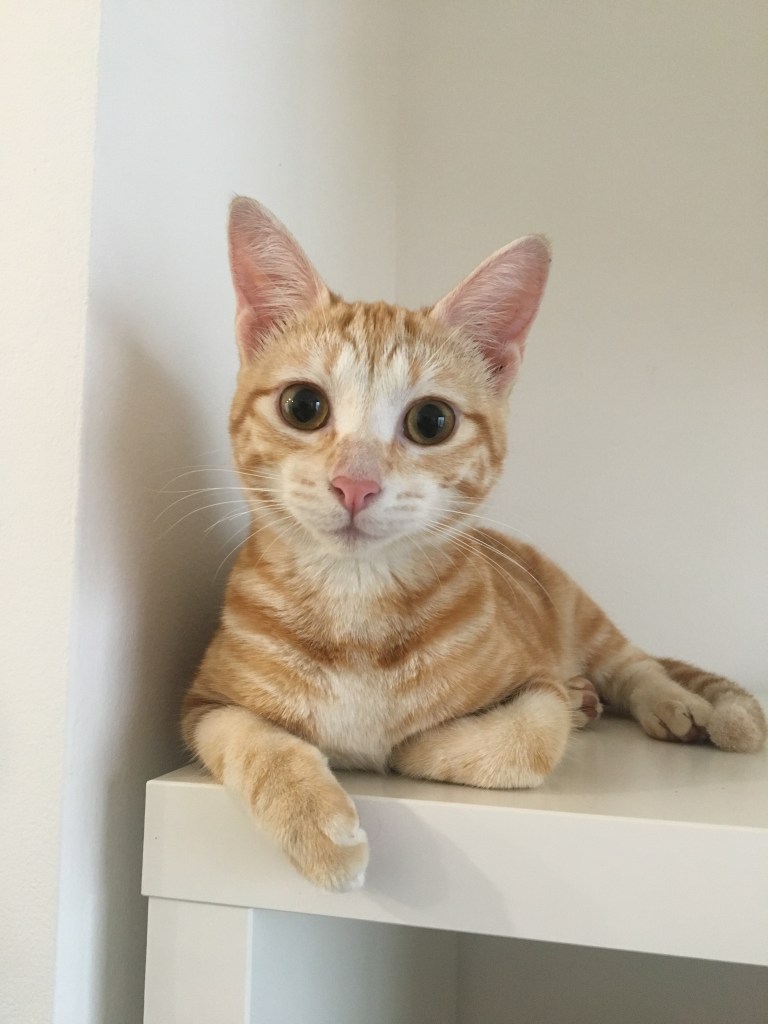
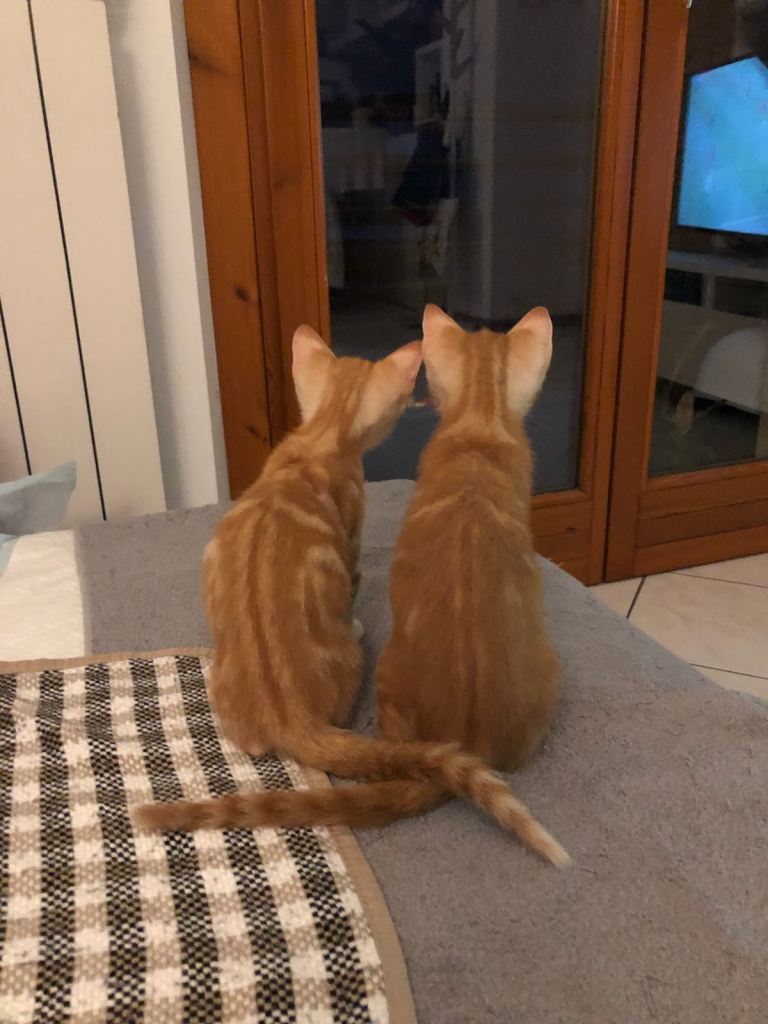

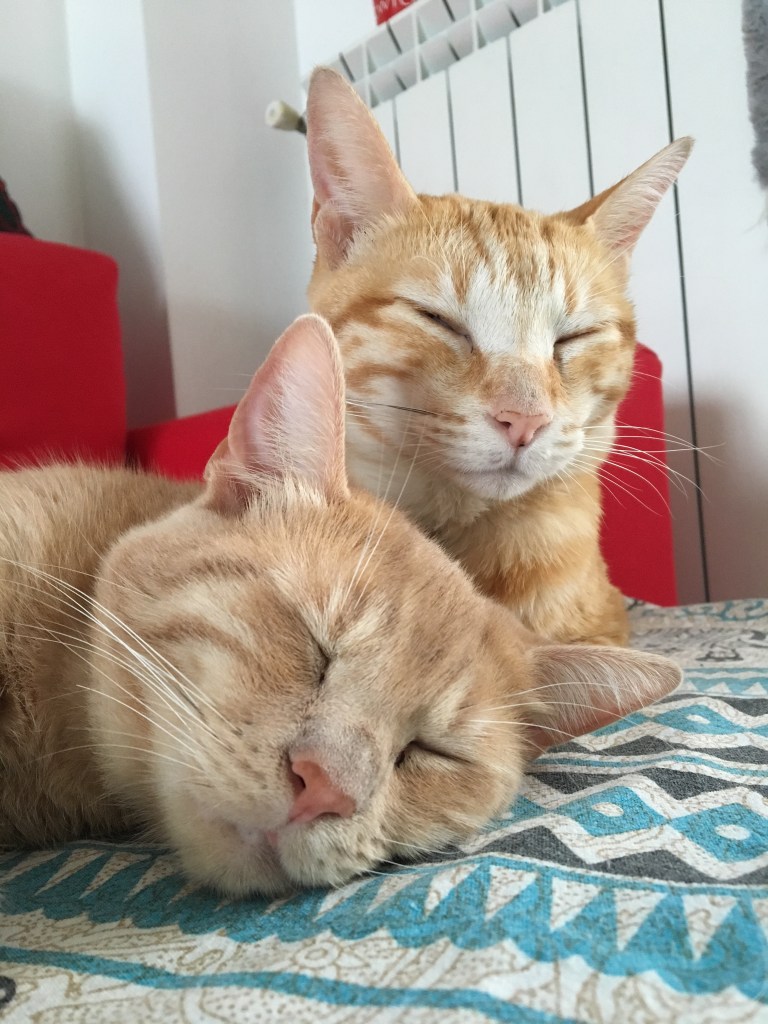
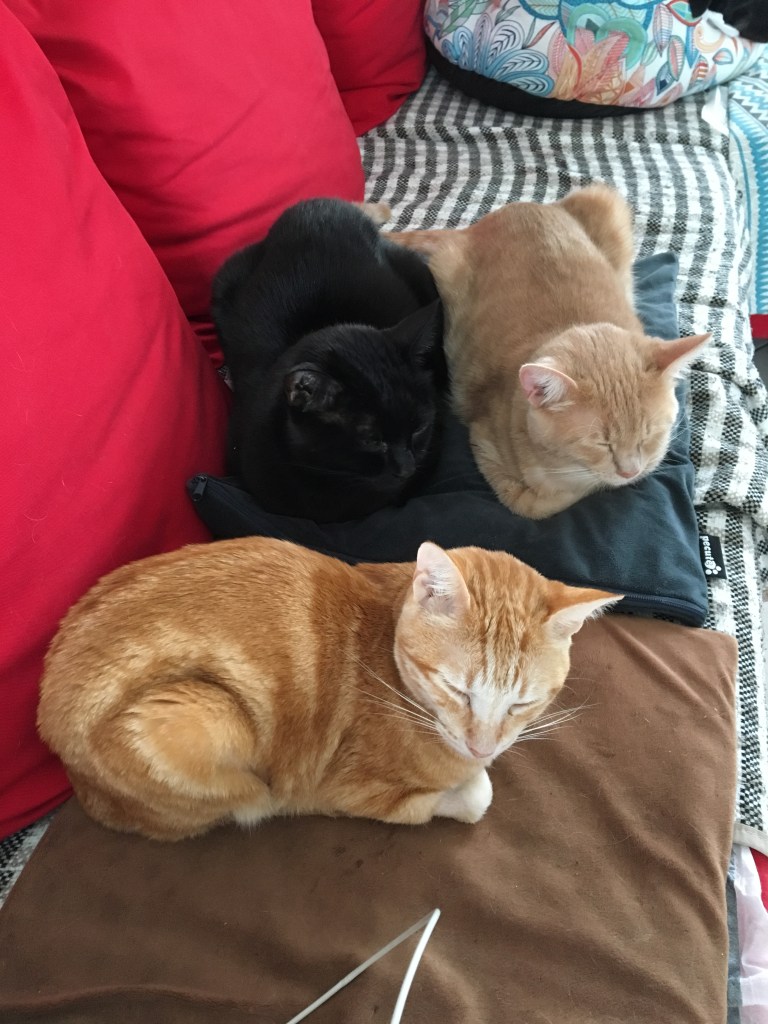


 Cats of Abruzzo
Leave a reply to katrinastudysul Cancel reply