While there are many superstitions and traditions surrounding cats in general, most of them positive in connotation, no other colours seem to have collected the negative image that the black cat has been given over time. Around the world, superstitions state that it is bad luck if a black cat crosses your path – although, I can at least relish in being British on this one as, in Celtic folklore, a black cat is considered a good luck charm.
Have they always had bad press?
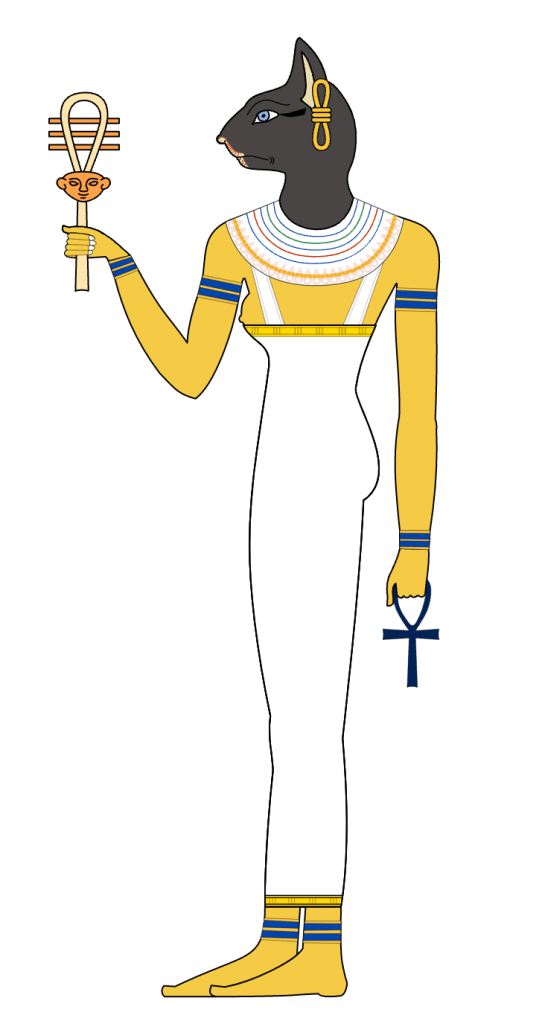
Cats and humans have a long and intricate history. As far back as the Ancient Egyptians, cats were considered divine symbols, and the Ancient Egyptian goddess Bast, a protector from evil spirits and of the family, was represented as a cat-headed woman. Many tomb paintings of the time show cats participating in everyday life, such as hunting and sitting under chairs in the home, but also killing the snake deity, Apopis, who threatens the sun god Ra at night in the underworld.
Later, in Norse Paganism Mythology, Freyja, whose roles amongst other things was to protect vegetation, was said to be pulled on a chariot by two grey cats and superstitious farmers would leave bowls of milk out in their fields for the mythical moggies.
There are even connections between cats and the Virgin Mary. Italian legend states that on the same night that Mary gave birth to Jesus, a cat in Bethlehem gave birth to a single kitten.
So where did it go wrong for black cats?
Somehow, over time, black cats specifically came to be associated with the devil and other evil beings such as witches. But why, if cats had always been so revered and adored throughout history?
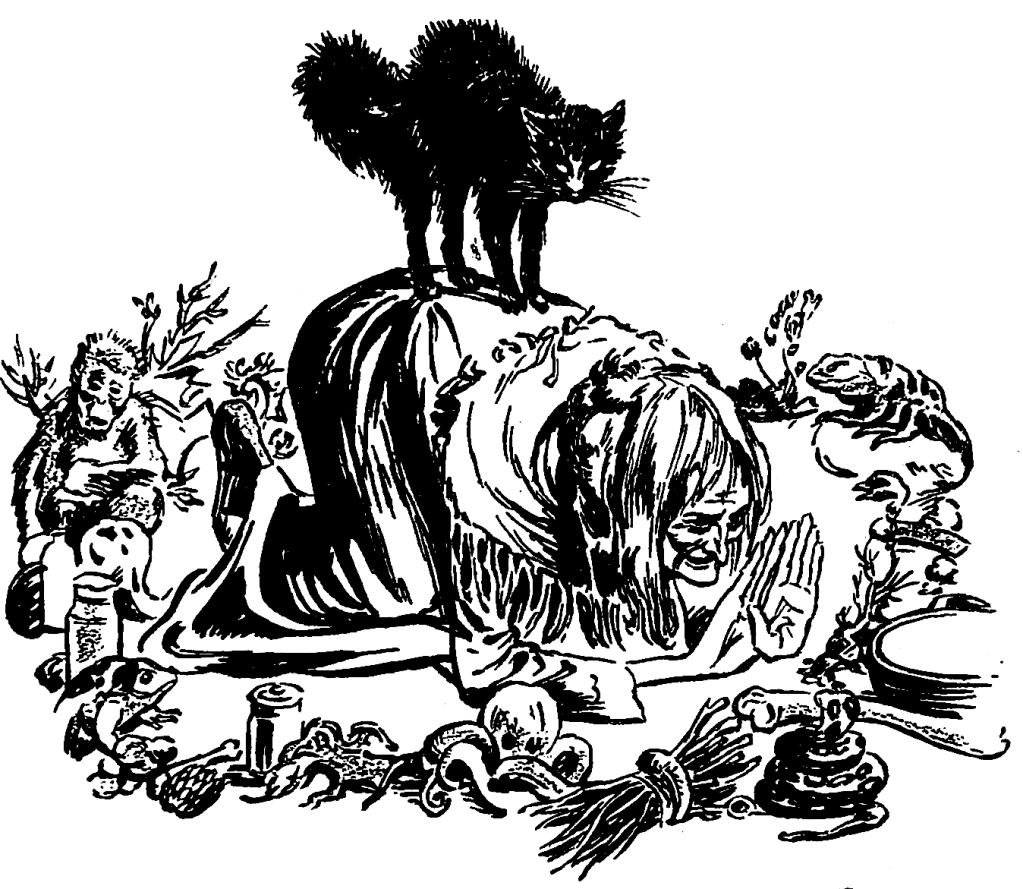
While, at the beginning, the early Christian Church lived alongside practitioners of Paganism, as the church gained power and became stronger across Europe, witches started to be considered as “the competition” and so the witch-hunting began. Pagan witches honoured the natural world, having deep respect for animals and plants alike. Therefore, any close relationships between humans and animals were deemed to be diabolical and thus the friendly local cat lady became an evil witch who needed to be killed.
The first written declaration of the evilness of black cats dates back to 13th June 1233 when Pope Gregory IX issued the Vox in Rama which was the first papal bull to associate cats with witchcraft. According to the bull, the devil worshipped by the ever-growing satanic cults in Germany at the time was a “shadowy” half-man/half-cat creature. The intervention by the Pope had a dramatic impact on how people in Europe viewed the cat, turning it from a sacred animal of Paganism into a creature of the devil, to be feared and persecuted. According to some scholars, although debated, the resulting witch-hunt against cats could have been enough to cause such a decline in their population that it actually led to the outbreak of bubonic plague that became known as the Black Death – there simply weren’t enough cats around to keep rodent numbers down. Personally, I’m not convinced on this one since cats are not great ratters anyway and even if the cat population had been dramatically depleted, ratting dogs such as terriers were well-established by the Middle Ages.
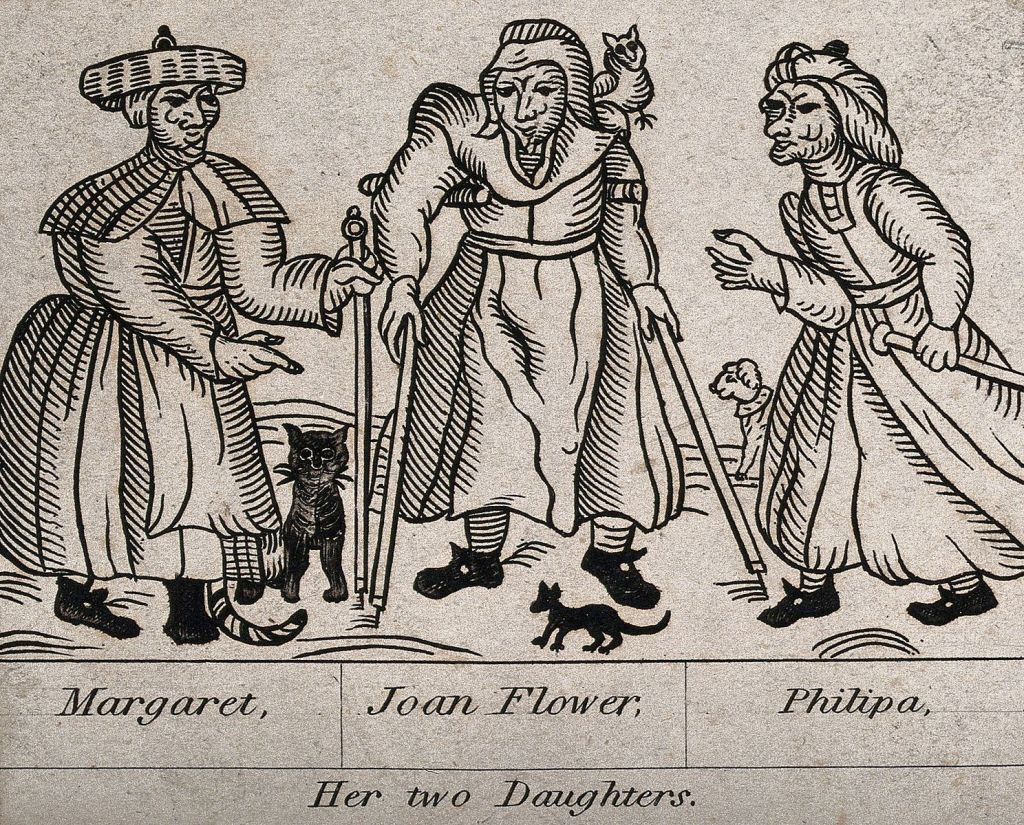
However, one thing is certain – by the Middle Ages cats, especially black cats, were well and truly connected with witchcraft and the Devil Himself, and it’s easy to see how a black cat crossing one’s path would have been something to fear. One notion points to the fact that many superstitious peasants of the Middle Ages may well have run straight to their priest and paid for a blessing should they be so unfortunate as to encounter a black cat. Is it too cynical to point out that this was probably a good source of income for the Church?
It’s not all doom and gloom though!
In Scotland, black cats are considered an omen of good luck. This probably stems from the Celtic roots of the nation, as black cats were sacred in Celtic mythology. According to Scottish folklore, the sudden arrival of a black cat at a new home signifies prosperity. While, over in the Celtic nation of Wales, a poem from 1896 goes as follows:
A black cat, I’ve heard it said,
Can charm all ill away,
And keep the house wherein she dwells
From fever’s deadly sway.
Facts about black cats
- The Cat Fancier’s Association in America recognises 22 breeds of cat that can have solid black coats.
- The Bombay breed of cat is exclusively all black.
- All-black fur colour has a slightly higher rate of prevalence in male cats than it does in female cats.
- Most all-black cats have golden irises (although our Blackjack has green eyes)
- Black cats that spend a lot of time in the sun may “rust”. There black fur starts to turn a reddish-brown colour as the sun damages the eumelanin pigment.
So why the need for an “Awareness Month”?
While it would appear that few people still genuinely believe the negative superstitions surrounding black cats, one thing remains true – their rates of adoption from shelters around the world are significantly lower than those of their more colourful brethren, sometimes up to 50% lower. Additionally, there was a noticeable yet worrying trend starting, especially in America, where black cats would be adopted around Halloween and then abandoned later on when the novelty had worn off. Due to the negative reputation that black cats had developed, Layla Morgan Wilde decided something needed to be done and so she started “Black Cat Awareness Month” with the aim of improving the image of our sleek house panthers.


 Cats of Abruzzo
Leave a reply to Cathy King Cancel reply